Corporate ground transport in Orange County, California covers account-based billing, duty-of-care obligations, and vehicle management for companies that move executives, clients, and teams. Modern Elite Transportation, headquartered in Irvine, runs individual executive transfers and full group programs under centralized accounts with fixed, transparent pricing.
Key Takeaways
- Companies that centralize travel booking can cut travel costs by nearly 18% — consolidated ground transport accounts make that savings easier to capture across recurring business trips.
- 85% of employees say safety matters when evaluating a job that involves business travel, and 83% of female business travelers report specific safety concerns during work travel.
- Business travel expenditures remain 14% below pre-pandemic levels — corporate transport decisions now carry more budget scrutiny than before.
- Executive ground transport typically runs on flat-rate or hourly/as-directed pricing models — transparent billing is standard for maintaining predictable corporate travel budgets.
- ISO 31030 is the international framework for managing travel risk; any corporate travel safety policy should treat ground transportation as a distinct category with its own standards.

The Short Version
Orange County corporate transportation through Modern Elite covers executives, client groups, and team movement under fixed-rate corporate accounts. Billing is centralized, pricing is transparent, and every vehicle comes with a professionally trained, background-checked chauffeur. Companies running regular business travel through Orange County benefit from account-level management rather than trip-by-trip booking, particularly when travel policies require consistent vendor use and auditable ground spend.
The Detail
Two billing models cover most corporate ground transport arrangements. Understanding which one applies — and where each breaks down — prevents budget disputes at month end.
| Model | How It Works | Best For |
|---|---|---|
| Flat-rate | Fixed price per trip, based on origin, destination, and vehicle type | Airport runs, point-to-point executive transfers |
| Hourly / as-directed | Billed by the hour with a minimum; driver stays with the client | Multi-stop days, road shows, client entertainment |
Corporate transportation accounts often require centralized billing and dedicated account management to function at scale. Ad-hoc booking puts cost visibility in the hands of individual employees; account-level management puts it in the hands of the company.
Duty of Care: What the Numbers Show
Duty of care in corporate travel covers an employer’s obligation to protect employees and clients during work-related movement. The data makes the stakes specific.
85% of employees value safety in business travel. 83% of female business travelers report safety concerns on the road. In 2017, 53% of business travelers were impacted by terrorism events — a data point that illustrates why ISO 31030 exists as a systematic framework for managing travel risk.
1 in 5 business travelers reported negative mental health effects from work travel in 2019. Business travel can disrupt personal lives and routines in ways that accumulate over time. Companies that treat ground transport as a duty-of-care issue — not just a logistics line item — reduce both actual risk and the burden on their teams.
21% of Gen Z travelers find maintaining work-life balance difficult while traveling. As younger employees move into roles that require business trips, travel policies that include reliable, low-stress ground transport have practical retention value.
Billing Models and Account Management
A well-structured corporate account captures all trips under one invoice cycle, applies consistent pricing across vehicle types, and gives travel managers a single contact for changes, cancellations, and additions. That structure is what makes centralized booking generate the cost savings that ad-hoc arrangements cannot.
Black car and professional chauffeur services typically operate on fixed or transparent hourly rates. The distinction between flat-rate and as-directed billing is not a small one: a road show or client dinner that runs beyond the booked window shifts from one model to the other, and the policy should define which applies before the driver leaves the curb.
The Exception
Flat-rate pricing breaks down when itineraries change mid-day. A client dinner that runs two hours past the scheduled pickup, a multi-venue evening that adds unplanned stops, or a last-minute airport diversion all push a flat-rate trip into as-directed territory.
Companies that do not specify in their travel policies how mid-trip changes are billed end up resolving invoice disputes after the fact rather than preventing them.
Why It Happens
Most corporate travel policies define approved vendors and cost thresholds but do not address what happens when a booked trip changes after departure. Drivers and dispatch handle the change in real time; the billing discrepancy surfaces only when the invoice arrives and no one can reconstruct the decision that authorized the additional time.
How to Spot It Early
Review invoices that show the same pickup-destination pair with significantly different totals — that spread marks untracked itinerary changes that the policy did not anticipate.
Chauffeur Standards and Vehicle Requirements
Corporate transport chauffeurs require professional licensing, executive protocol training, and background screening. For holiday travel in orange county and regular corporate runs alike, the vehicle standard matters as much as the driver behind it.
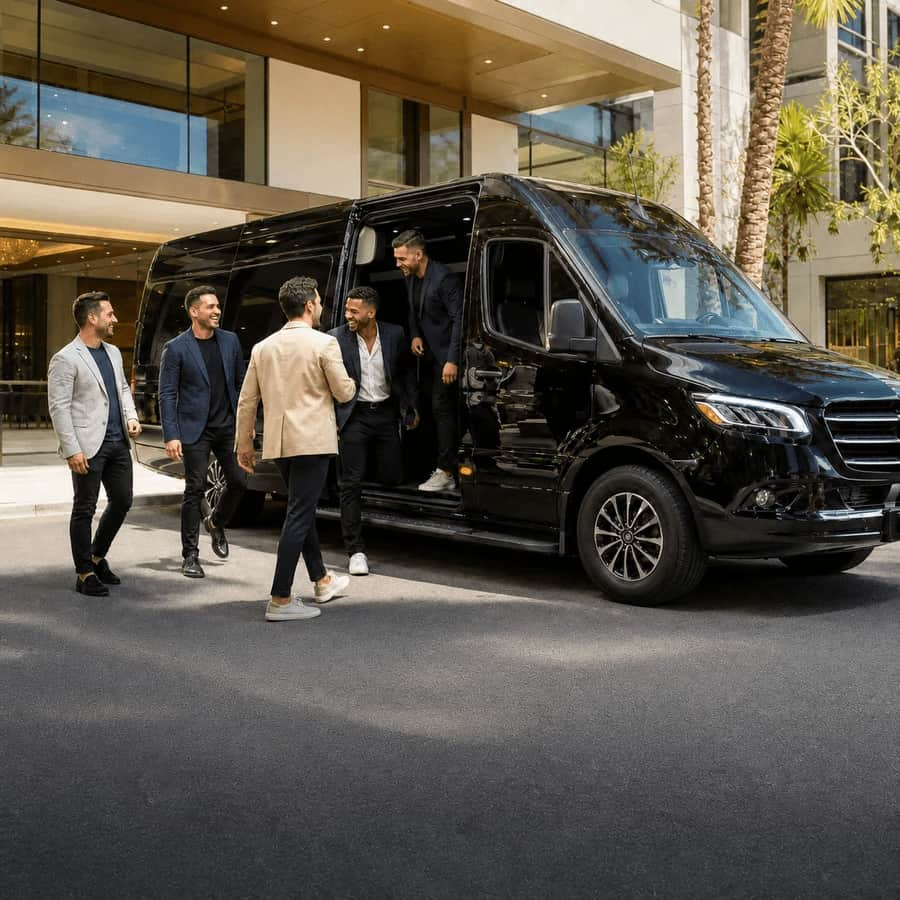
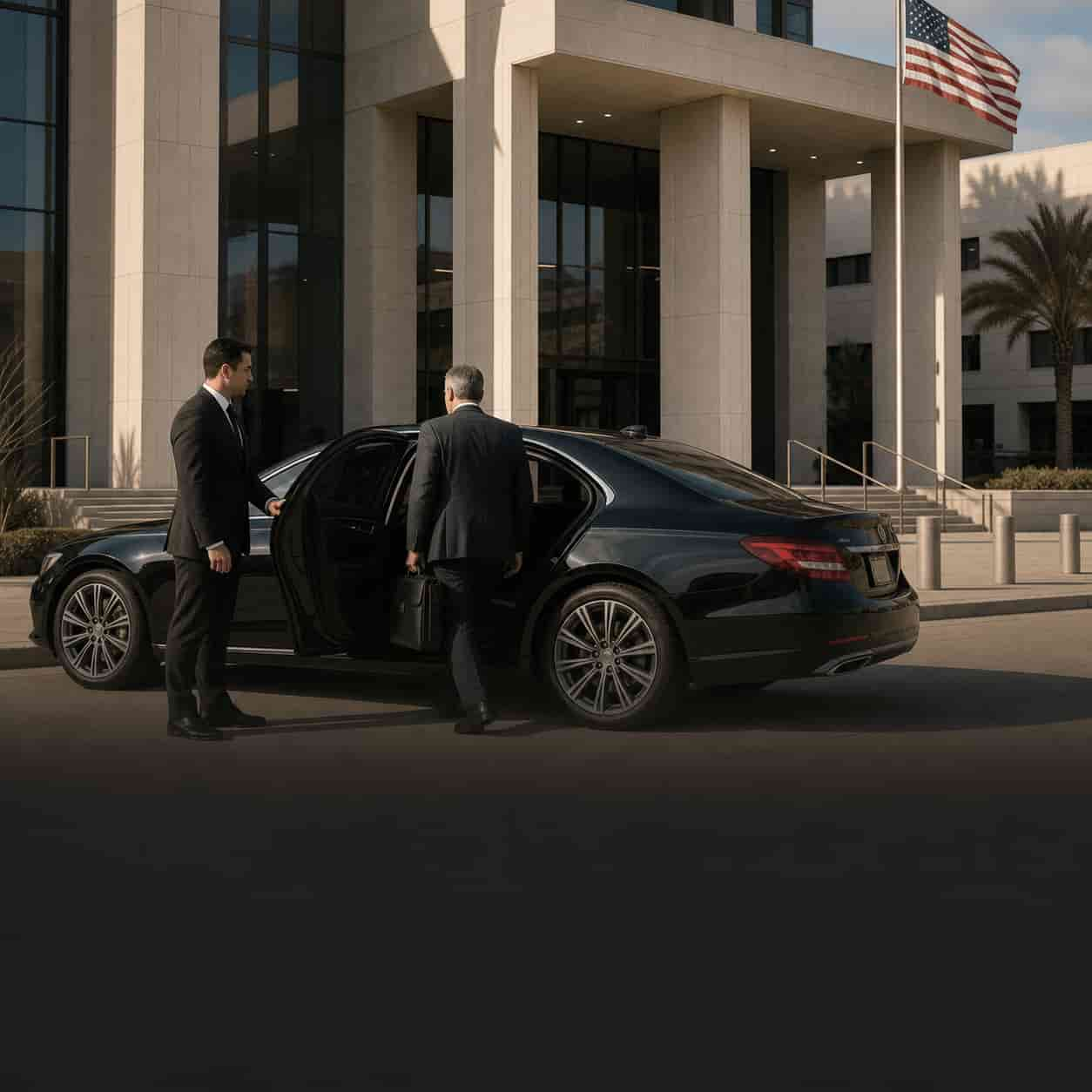
Late-model vehicles maintained to manufacturer specifications reduce mechanical risk. A varied fleet — sedans for individual executives, SUVs for small client groups, Sprinter vans for team movement — lets account managers assign the right vehicle without engaging a separate provider for each category.
How Corporate Ground Transport Plays Out in California
Orange County sits between two major California business corridors: the I-405 linking Los Angeles and San Diego, and the I-5 connecting inland campuses to John Wayne Airport (SNA). Business travel through this area involves airport transfers, client runs, corporate event shuttles, and recurring account-managed programs across Irvine, Newport Beach, Anaheim, and the surrounding municipalities.
Business travel expenditures remain 14% below pre-pandemic levels nationally. In California, that gap narrows for industries where in-person meetings are non-negotiable — legal, finance, aerospace, and pharmaceutical — all of which have significant Orange County presence.
33% of business professionals report that videoconferencing has reduced their overall travel. The majority who still travel regularly need reliable, account-managed ground transport that integrates with existing travel policies. For corporate holiday party transportation in orange county and year-round executive movement, the same account structure applies.
SNA and the Orange County Business Travel Corridor
John Wayne Airport (SNA) sits 7 miles from central Irvine and handles the bulk of Orange County business travel. LAX adds 45 to 90 minutes of drive time depending on 405 and I-5 conditions. Companies that base corporate ground transport accounts out of Irvine typically route executives through SNA by default — a policy that simplifies pickups and reduces ground transport time by half compared to LAX arrivals.
Many business travelers now incorporate leisure time into business trips, a pattern that extends planned stays and adjusts the return pickup window. A corporate account with flexible as-directed billing handles those schedule shifts without requiring a new booking.

What People Get Wrong About Corporate Travel Ground Transport
Treating ground transport as an expense line rather than a policy category. Ground transportation belongs in the travel policy alongside flight booking, hotel procedures, and expense rules. Companies that omit it end up with inconsistent vendor use, variable pricing, and limited visibility into actual ground spend.
Assuming flat-rate pricing covers everything. Flat rates apply to defined point-to-point movements. Multi-stop days, client entertainment runs, and full-day executive assignments require as-directed billing. Mixing the two without a clear policy definition generates invoice disputes.
Skipping chauffeur credential verification. Professional licensing, background checks, and executive protocol training are not standard across all ground transport providers. 88% of small business owners say they value business travel — that investment starts with verifying who is transporting the people doing it.
Booking transport outside the travel policy. Corporate accounts running on centralized billing — rather than employee-paid, expense-reported trips — give travel managers spend control and compliance visibility. Companies can reduce travel costs by nearly 18% with centralized booking. Separate, individual bookings forfeit that savings every time.
How Modern Elite Transportation Approaches Corporate Transport
Modern Elite Transportation runs Orange County corporate transportation under structured corporate accounts for individual executive transfers and multi-vehicle group programs. All pricing uses flat-rate or hourly/as-directed models with no surge charges, regardless of day or time.
Every chauffeur completes background screening and executive protocol training before their first booking. Real-time flight tracking is standard on all airport runs — the driver adjusts the curbside arrival to the actual gate landing, with no additional coordination required from the client. For companies that also manage team events, orange county brewery tours and other employee programs can be coordinated under the same corporate account without separate pricing.
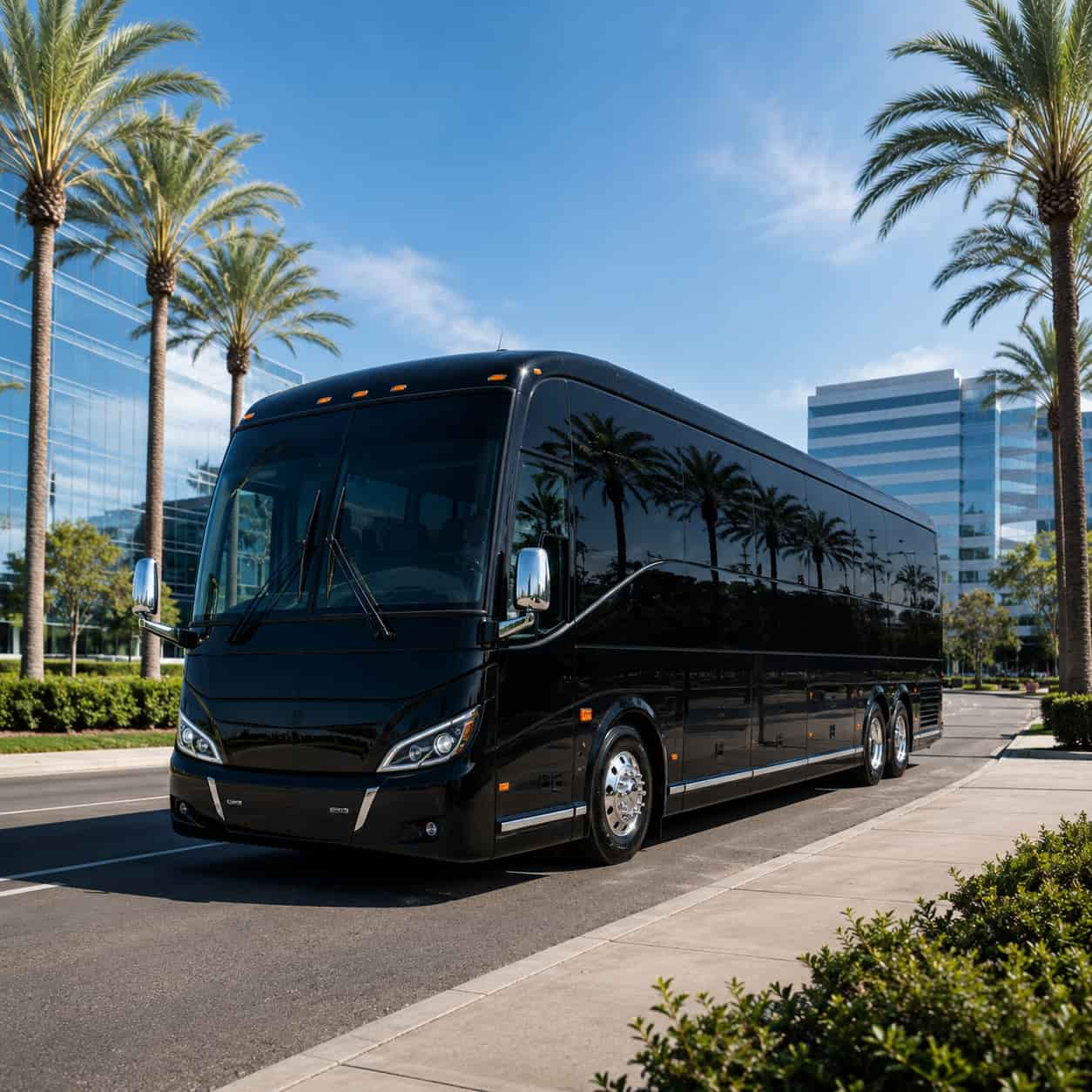
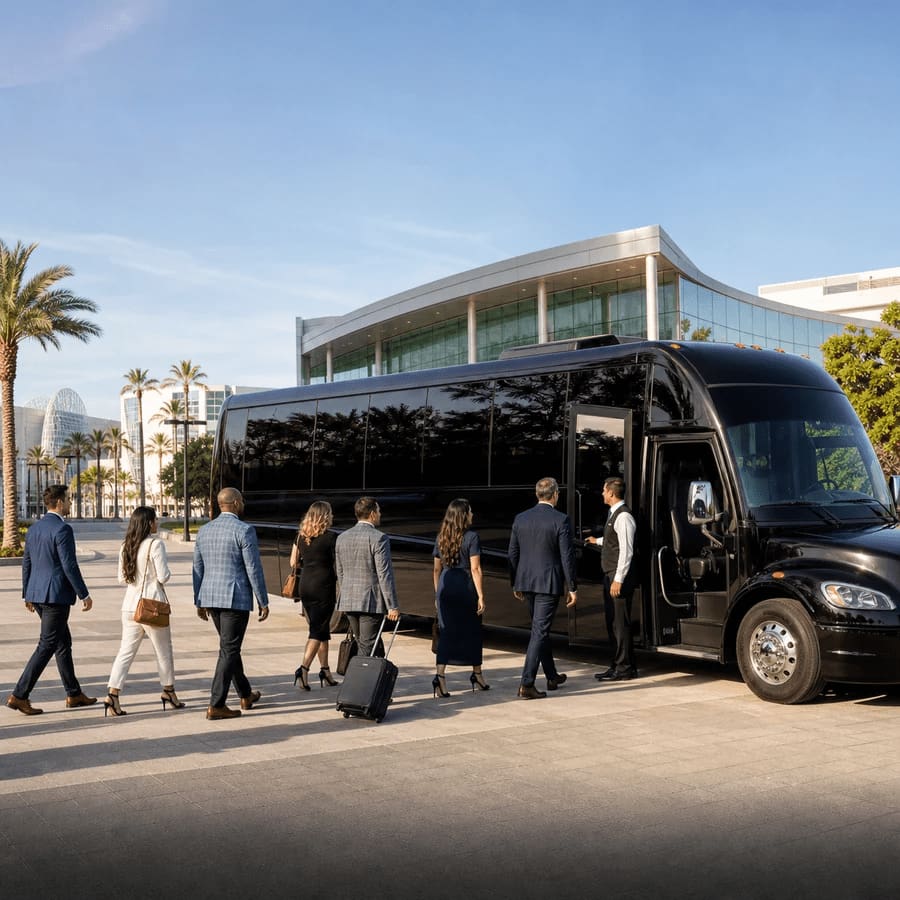
Vehicle options include executive sedans for individual runs, SUVs for small client groups, Sprinter vans for team movement, and charter buses for larger corporate events. An orange county limo booking through Modern Elite carries the same account terms and invoice structure as any corporate transport arrangement — no separate tier for vehicle class.
Frequently Asked Questions About Corporate Ground Transport
What is corporate ground transport for business travelers?
Corporate ground transport refers to professionally managed, account-based vehicle services for business travelers — covering airport pickups, executive transfers, client runs, and team shuttles. Unlike ride-hail or reimbursed personal trips, corporate transport operates on fixed accounts with centralized billing, consistent pricing, and alignment with company travel policies and duty-of-care obligations.
What should a corporate travel safety policy include for business trips?
A corporate travel safety policy for business trips should specify approved ground transport vendors, chauffeur credential requirements, vehicle standards, and billing authorization procedures. ISO 31030 provides an international framework for managing travel risk at the organizational level. Policies should also address duty-of-care obligations for employees in transit, particularly for solo travelers on late-night or early-morning runs.
How does billing work for corporate ground transportation accounts?
Corporate ground transportation accounts typically bill on flat-rate or hourly/as-directed models. Flat-rate pricing covers defined point-to-point trips — airport runs, hotel transfers, executive pickups. Hourly/as-directed billing covers multi-stop days and full-day assignments. Centralized accounts consolidate invoicing under one cycle, giving travel managers full spend visibility without requiring individual expense reports from each traveler.
Can a corporate account cover travel management for multiple people and vehicle types?
Yes. A corporate account with a varied-fleet provider covers sedans, SUVs, Sprinter vans, and charter buses under the same account terms. A single booking can cover multiple people traveling together, and group movements can run alongside individual executive transfers on one account — no separate pricing structures per vehicle class and no duplicate vendor relationships to manage.
About Modern Elite Transportation
Modern Elite Transportation is a fully licensed and insured chauffeured ground transportation company headquartered in Irvine, California.
The company holds a California Public Utilities Commission (CPUC) Transportation Charter Party (TCP) permit and carries full commercial liability coverage for all passenger transportation in the state. All chauffeurs complete background checks and executive protocol training before their first booking.
Orange County corporate transportation through Modern Elite covers individual executive transfers, group programs, and account-managed arrangements for companies operating across Orange County and the broader Southern California region. Book online or by phone at moderneliteworldwide.com.
Service Area
Modern Elite Transportation serves Irvine as its primary base and covers all of Orange County — including Newport Beach, Costa Mesa, Anaheim, Huntington Beach, Laguna Beach, and Santa Ana. Service extends to Los Angeles, San Diego, and the Inland Empire. John Wayne Airport (SNA), LAX, Long Beach Airport (LGB), and Ontario International Airport (ONT) are within the standard service footprint for both pickup and drop-off.
Next Step
Book your Orange County corporate transportation online or by phone. Corporate accounts, fixed-rate pricing, and a professional chauffeur are standard on every Modern Elite reservation.
Browse Modern Elite Transportation’s full fleet — executive sedans, SUVs, Sprinter vans, and charter buses — for your next Orange County corporate transport program.